

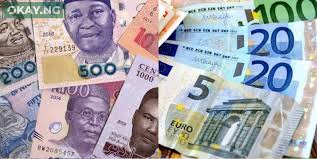
Market activity yesterday indicated that naira bulls continued to assert pressure, driving the EUR/NGN exchange rate down to N1,765 per euro.
Political Tensions in France Weigh on the Euro
France, the Eurozone’s second-largest economy, faces political turbulence after Prime Minister François Bayrou was ousted after just nine months in office. Despite the upheaval, President Emmanuel Macron’s prompt appointment of a successor has so far prevented a sharp decline in the euro.
Sébastien Lecornu, 39, France’s former defense minister and close ally of Macron, was named as the new prime minister. Lecornu assumes office today and faces the immediate challenge of managing a divided parliament while approving France’s 2026 budget by December 31.
France is also grappling with nationwide protests under the “Block Everything” movement, which has disrupted public services, schools, and transportation. Lecornu’s first public statement emphasized “a clear direction: the defence of our independence and power, serving the French people, and maintaining political and institutional stability.”
Economic pressures persist: France spends €67 billion annually on interest payments alone and has one of the EU’s largest budget deficits, currently at 5.8%. Only Greece and Italy have higher debt-to-GDP ratios within the EU. Analysts warn that the political uncertainty could impact France’s credit rating, though a full-blown crisis remains unlikely given a nearly balanced current account.
Geopolitical concerns are also weighing on investor sentiment. Reports of Polish forces shooting down alleged Russian drones near the Belarusian border have raised fears of escalating tensions between Russia and NATO members, which could further influence the euro.
U.S. Dollar Holds Steady as Key Economic Data Looms
The EUR/USD tested levels below 1.17 after retreating from Monday’s multi-week highs near 1.1780. The U.S. dollar remained stable as investors await this week’s crucial inflation reports, including the Producer Price Index (Wednesday) and Consumer Price Index (Thursday).
Market participants are assessing the likely size of the Federal Reserve’s upcoming interest rate cut, with expectations for a 25-basis-point reduction next week and a total easing of 66 basis points this year. Uncertainty remains due to potential impacts from U.S. tariffs and economic data.
Meanwhile, geopolitical developments—including Poland’s air defense response to Russian drones—have added volatility to markets. Gold and silver prices reflect this turbulence, reaching $3,700 and $42 per troy ounce, respectively, with silver hitting a 14-year high.
European Central Bank in Focus
The ECB is expected to maintain its benchmark interest rate this Thursday. Markets will closely watch ECB President Christine Lagarde’s press conference for signals about whether the bank has reached its terminal rate or if further easing is possible. Lagarde’s comments will be critical, especially in light of France’s fiscal challenges.
