

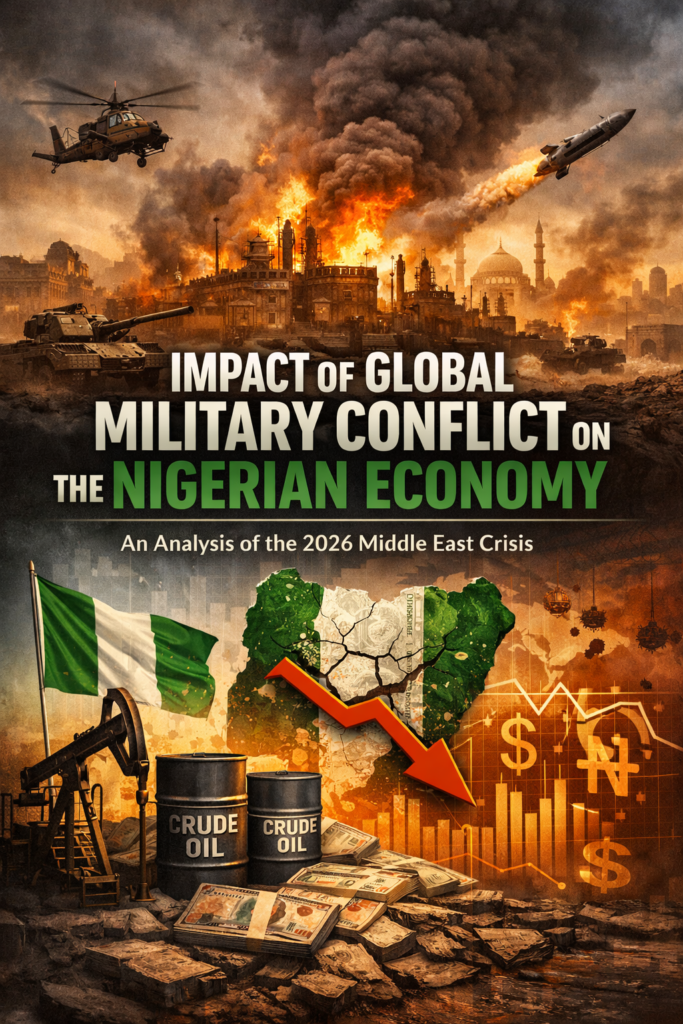
Abstract
This report analyzes the economic consequences for Nigeria following the military escalation between the United States, Israel, and Iran in February 2026. It explores how geopolitical tensions influence global oil benchmarks and the subsequent divergent effects on Nigeria’s energy, consumer goods, and banking sectors. The findings suggest that while renewed inflation and potential “risk-off” investment shifts.
Introduction
On February 28, 2026, direct military strikes by the United States and Israel against Iran sparked a fresh escalation in Middle East tensions. The immediate global response was a rally in crude oil markets, with Brent crude reaching $73 – $80 per barrel, its highest level in six months. This price surge reflects a “geopolitical risk premium” as markets anticipate potential supply disruptions near the Strait of Hormuz, a critical chokepoint for one-fifth of global oil flows. For the Nigerian economy, these tensions create a complex environment where fiscal gains from higher oil prices must be balanced against domestic inflationary pressures and global market volatility.

1. Impact on the Oil and Gas Sector
The energy sector experiences the most immediate and polarized effects from the conflict.
- Upstream Segment (Positive): Sustained higher crude prices are structurally beneficial for upstream producers like Seplat Energy and Aradel Holdings. Since production costs are relatively stable, the incremental revenue from oil prices exceeding previous averages of $70 per barrel flows directly into operating profits and free cash flow. This strengthens corporate balance sheets, enhances dividend capacity, and can drive higher equity valuations.
- Downstream Segment (Negative): In contrast, downstream operators such as Eterna and Conoil face significant headwinds. Rising global crude prices increase the cost of procuring refined products, which can narrow profit margins unless retail prices are adjusted rapidly.
2. Impact on the Consumer Goods Sector
The consumer goods sector, which showed recovery in 2025 with companies like Nestlé Nigeria and Nigerian Breweries returning to profitability, faces renewed risks.
- Operating Costs: Elevated oil prices drive up the costs of diesel, transportation, and logistics.
- Inflationary Pressure: If Brent crude remains at or above $90, the resulting inflation may erode the margin gains achieved in previous years.
- Demand Sensitivity: While companies may attempt to pass increased costs to consumers through higher prices, there is a significant risk of weakening sales volumes due to the fragile spending environment in Nigeria.
3. Impact on the Banking Sector
The banking sector is indirectly but significantly affected by the conflict through macroeconomic variables.
- Foreign Exchange and Stability: Higher oil prices generally improve Nigeria’s foreign exchange position and external buffers, which supports overall macro confidence and bank valuations.
- Monetary Policy and Asset Quality: Conversely, if energy-driven inflation re-accelerates, the Central Bank may pause planned interest rate cuts. While higher interest rates can support a bank’s net interest margins, they also increase borrowing costs for businesses. This raises the risk of slower loan growth and potential deterioration in asset quality for sectors sensitive to cost pressures, such as manufacturing and transport.

Conclusion
The overall impact of the 2026 military conflict on the Nigerian economy is largely dependent on the duration of the oil price spike. A brief spike may cause only short-term market volatility, but a prolonged conflict could fundamentally shift earnings expectations across all major sectors. While the upstream energy sector provides a hedge for the broader market, the risks of “risk-off” shifts by foreign investors and domestic inflation remain critical concerns for long-term stability.
